Start with the Cedar Rapids building and the deposit
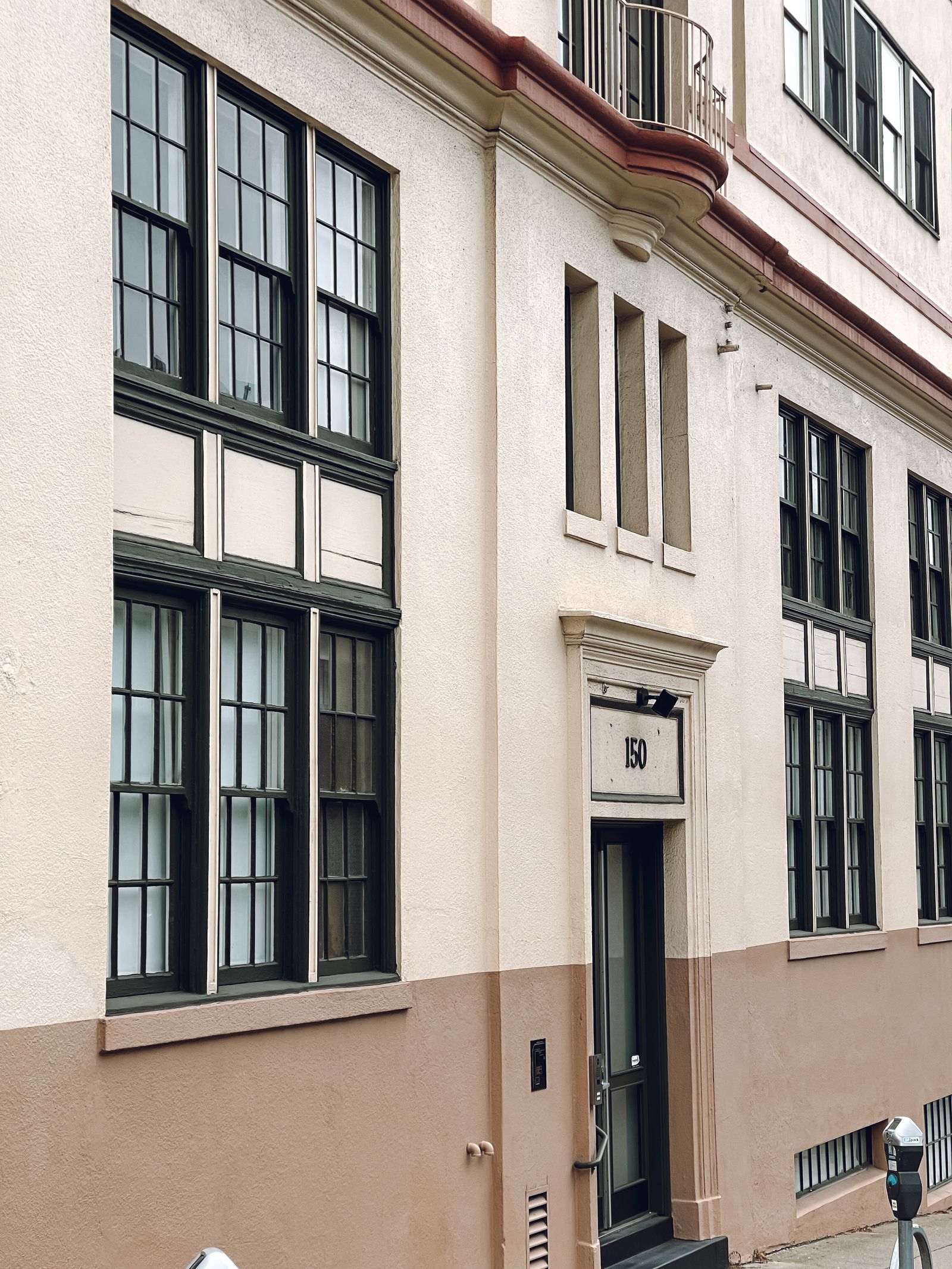
Cedar Rapids commercial properties often combine older brick, newer masonry, precast panels, concrete, storefront glazing, painted steel, signs, canopies, EIFS, and repaired joints. Downtown and riverfront buildings may have narrow sidewalks, active storefronts, and public-facing entrances. Czech Village and NewBo properties can mix historic-looking masonry, awnings, patios, murals, and tight service areas. Collins Road retail has broad storefronts, parking-lot splash, signs, and customer circulation. Industrial and medical corridors may add loading activity, air-handling equipment, fenced areas, covered drop-offs, and routes that must remain clear. We divide the facade into material and exposure zones before choosing a method.
Soft washing can suit compatible algae, mildew, light organic growth, and atmospheric film. It will not repair failed mortar, cracked masonry, spalled concrete, corrosion, damaged coatings, active leaks, or moisture behind a wall. A dark streak may be biological growth, traffic film, salt, mineral residue, oxidation, or a shadow from damage. We describe the observed condition, test where appropriate, and set a realistic finish expectation. Glass restoration, hard-water removal, construction residue, graffiti treatment, specialty stains, and facade repairs should be scoped separately when present.
- Separate brick, stone, concrete, glass, metal, EIFS, stucco, and painted zones.
- Distinguish organic growth from salt, pollen, minerals, traffic film, and oxidation.
- Identify routine maintenance areas versus a pre-event facade reset or detail scope.
- Keep repair, leak diagnosis, coating replacement, and restoration outside routine washing.
Coordinate Downtown, Czech Village, NewBo, and retail activity
Downtown Cedar Rapids properties may share sidewalks, curb space, parking, events, deliveries, and river-adjacent low points. A building near the Cedar Rapids Museum of Art or the Paramount Theatre may need a public-way plan and a quiet window. Czech Village and NewBo businesses often depend on visible entrances, outdoor seating, customer circulation, and compact lots. A work zone should preserve accessible routes, protect storefronts and signs, and give the facility contact a clear way to pause a section when a customer, delivery, event, or unexpected vehicle enters.
Collins Road retail and office properties have a different rhythm: shopping peaks, drive aisles, shared parking, delivery windows, and multiple tenants. Medical buildings along First Avenue and nearby corridors require special attention to patient drop-offs, emergency access, outdoor air intakes, mobility routes, and covered entrances. Industrial properties near the airport, rail, and Cedar River corridors may need loading, gates, forklifts, utility equipment, and shift changes coordinated. Phasing by elevation, entrance, tenant, or shift can keep the property usable while work progresses.
Plan for the Cedar River, flood context, and runoff
A Cedar Rapids address should be reviewed for its actual grade, drainage, nearby inlets, low points, and flood-related operating constraints rather than treated as an abstract map label. River-adjacent Downtown and Czech Village/NewBo sites may have paved areas, basements, garages, planters, curb lines, and entrances that move water differently during a storm. A property in or near a mapped flood area still needs a site-specific review of the building, and a property outside one may still have a difficult slope or an inlet beside the wall. We use the city and county flood and stormwater resources as planning references, then verify observed site conditions.
Wash water can move from upper walls into gutters, downspouts, pavement joints, planted beds, floor drains, curb lines, and neighboring low points. A storm drain below a facade is not automatic permission to send chemistry or loosened soil into it. Before setup, identify water access, hose routes, drains, landscaping, doors, electrical equipment, air intakes, vehicles, public paths, and adjacent parcels. The proposal should state whether protection, diversion, reduced flow, collection, recovery, or another control is needed, and what happens if the observed flow differs from the initial review.
- Locate drains, low points, planters, basements, doors, intakes, vehicles, and public paths.
- Confirm water access, hose routing, pedestrian controls, and emergency access before setup.
- Define the runoff approach and a stop condition if weather or drainage changes.
- Document completed, deferred, stained, or damaged areas at closeout.
Respect Midwest humidity, snow, salt, and freeze-thaw movement
Cedar Rapids weather creates several kinds of exterior soil. Humid, shaded north-facing walls can support organic growth, while spring rain and summer storms move roof and facade deposits toward lower walls and sidewalks. Snow and deicing salt collect at garage ramps, curb edges, accessible entrances, loading courts, and parking-lot splash zones. Spring pollen settles on ledges, signs, canopies, and glass. Freeze-thaw movement makes open joints, chipped concrete, failing sealants, and fragile coatings important to identify before a large rinse begins.
Salt residue is not algae, and an entrance marked by winter splash may need a different treatment from a shaded wall behind trees. We consider surface temperature, wind, precipitation, lightning, ground conditions, drying time, and the forecast before setup. A calendar date is a target window, not permission to work through unsafe conditions. If a walkway could freeze, wind could move spray beyond the controlled area, or a storm changes the runoff path, stopping and rescheduling is part of responsible planning.
Choose access that fits the elevation and the neighborhood
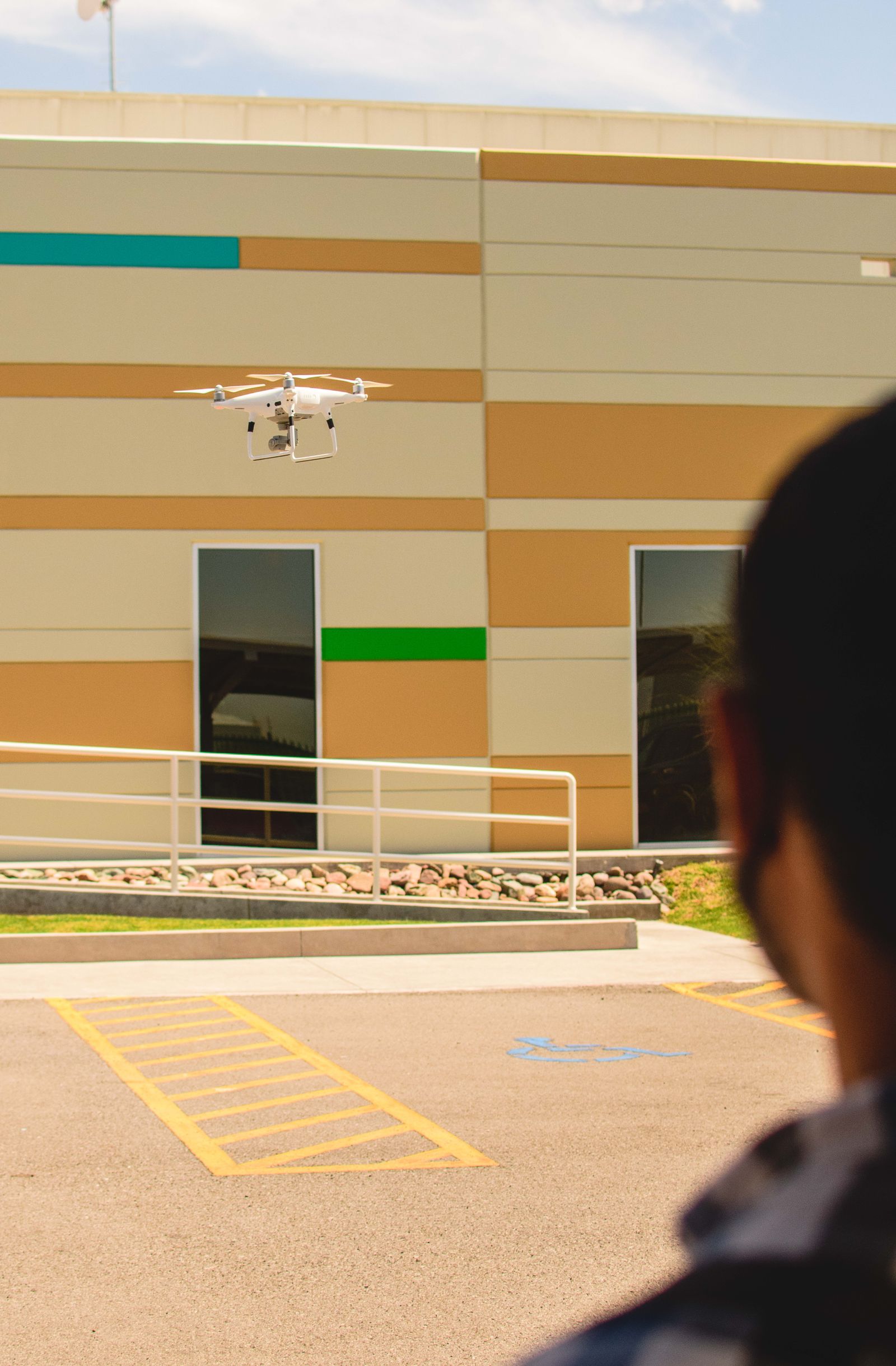
Lower elevations may be reachable from the ground, while upper Downtown facades, medical campuses, retail signs, and industrial walls introduce different access decisions. A lift may suit close contact and detail work; a water-fed pole may suit selected glazing; hand work may be required around signs, joints, and delicate trim. Drone assistance may support selected upper elevations when wind, wires, trees, balconies, launch space, public separation, visual line of sight, and applicable airspace rules allow it. It is not a universal replacement for ground access or inspection.
Cedar Rapids public sidewalks, event schedules, clinic activity, customer traffic, delivery movements, and industrial gates should be part of the access plan. If the property is near an airport or another aviation-sensitive area, the proposal should address the applicable Federal Aviation Administration requirements before promising aerial work. If a drone is not practical for a zone, the quote should identify the lift, pole, roof-access, or hybrid alternative. The goal is a workable scope, not a label attached to every elevation.
Get a quote tied to priority elevations and business outcomes
A useful Cedar Rapids commercial soft-washing proposal should name the service zones, materials, visible soil, included features, method, intended finish, exclusions, water assumptions, access approach, operating window, weather limits, and closeout documentation. It should distinguish broad facade washing from high-detail glass, hard-water removal, construction residue, graffiti, coating work, masonry repair, and envelope inspection. If drone assistance is proposed, the quote should explain the conditions that must be present and identify elevations where a lift, pole, or hand detail remains necessary.
Send the address, wide and close photographs, approximate height, priority elevations, known materials, preferred dates, water access, and drainage information. Include tenant restrictions, Collins Road shopping peaks, clinic hours, Downtown events, Czech Village/NewBo patio activity, loading periods, parking rules, and public access concerns when known. Call +1 239-351-2897 or email contact@dronebuildingcleaners.com to get in touch. We can determine whether a site review, test area, or phased plan is appropriate for one-time improvement or recurring exterior maintenance.