Pressure is a tool, not a complete recommendation
Pressure washing uses mechanical force to help detach soil. It can be useful on suitable hard surfaces and specific deposits when the operator controls distance, angle, pressure, temperature, nozzle selection, and runoff. The same force can drive water behind open joints, strip coatings, etch softer materials, scar mortar, damage EIFS, lift paint, break a fragile seal, or push soil into a porous surface. A bright result immediately after washing does not prove that the method was appropriate for the building envelope.
Cedar Rapids properties need the method evaluated in context. Historic masonry in or near Downtown and Czech Village may have details and joints that respond differently from newer concrete. A Collins Road storefront adds glazing, signs, canopies, and customer circulation. A medical or industrial wall may include intakes, equipment, gates, and sensitive areas. The right question is not whether more pressure can remove a mark; it is what combination of chemistry, dwell, agitation, rinse, access, and protection can clean the surface without creating a larger maintenance problem.
Why soft washing is often considered for organic and atmospheric soil
Soft washing generally relies more on compatible cleaning chemistry and controlled dwell time, followed by a lower-pressure rinse suited to the material. That approach can be useful for algae, mildew, light organic growth, and atmospheric film on compatible surfaces, including shaded elevations that retain Midwest moisture. It may reduce the need to place a concentrated high-pressure stream close to a joint, coating, or delicate finish. It is not a universal cure: oxidation, hard-water deposits, rust, efflorescence, chewing gum, graffiti, construction residue, and damaged material may need a different treatment or specialty scope.
Chemistry is responsible only when it is selected for the soil and material, kept away from people and sensitive equipment, given appropriate dwell, and rinsed or managed according to the site's water plan. A contractor should explain what is expected to improve, what may remain, what will be protected, and what condition would cause the work to stop. On a shaded north wall near the Cedar River or a tree-lined NewBo elevation, growth can also point to retained moisture, splash, failed drainage, or a building defect. Cleaning can improve appearance while the property team decides whether a separate correction is needed.
Match the method to brick, concrete, glass, metal, and EIFS
Brick, concrete, stone, glass, metal, EIFS, stucco, painted surfaces, and composite panels do not share one safe pressure or chemistry profile. Mortar joints and historic details may be more vulnerable than a brick face. EIFS and stucco can be damaged by aggressive impact or poorly controlled water. Painted metal can show oxidation or coating failure that washing reveals but does not repair. Glass may need separate attention for mineral spotting, construction debris, or sealant residue. A pre-cleaning review should map these zones and identify a test area when the finish or stain is uncertain.
The same Cedar Rapids building may need more than one method. A lower wall exposed to parking-lot splash might tolerate a controlled rinse, upper organic growth may be approached with soft-wash chemistry, entry glass may need low-pressure detail, and a stubborn mineral mark may require a specialty process. A quote that labels the entire property simply as pressure washing or soft washing can hide those differences. Ask for the material-by-material plan and the boundary of the expected result.
- Ask which materials will receive chemistry, pressure, agitation, or hand detail.
- Confirm how joints, coatings, glazing, signs, air intakes, and landscaping will be protected.
- Separate repair, restoration, specialty stains, and envelope investigation from cleaning.
- Use a test area when the finish, deposit, or material response is uncertain.
Include snow, salt, humidity, and the Cedar River water path
Cedar Rapids lower elevations can show a mix of deicing salt, road splash, mud, and snowmelt. Salt and mineral deposits may need a different approach from algae or mildew, and repeated aggressive rinsing can move residue into joints, landscaping, drains, or river-adjacent low points without solving the source. Spring pollen settles on ledges and canopies, while summer storms carry roof and wall deposits toward entrances. Freeze-thaw conditions make open joints, chipped concrete, and failing coatings more important to identify before a large rinse begins.
Water management belongs in the method decision. Locate storm inlets, floor drains, bioswales, planted beds, low points, accessible paths, neighboring property, and sensitive equipment. Confirm the water source and hose route, then define protection, diversion, collection, recovery, or reduced-flow controls as appropriate. A pressure setting does not answer where water and loosened material will go. For Downtown, Czech Village/NewBo, and other river-influenced sites, the responsible method accounts for the entire observed water path.
Compare access options instead of forcing one method
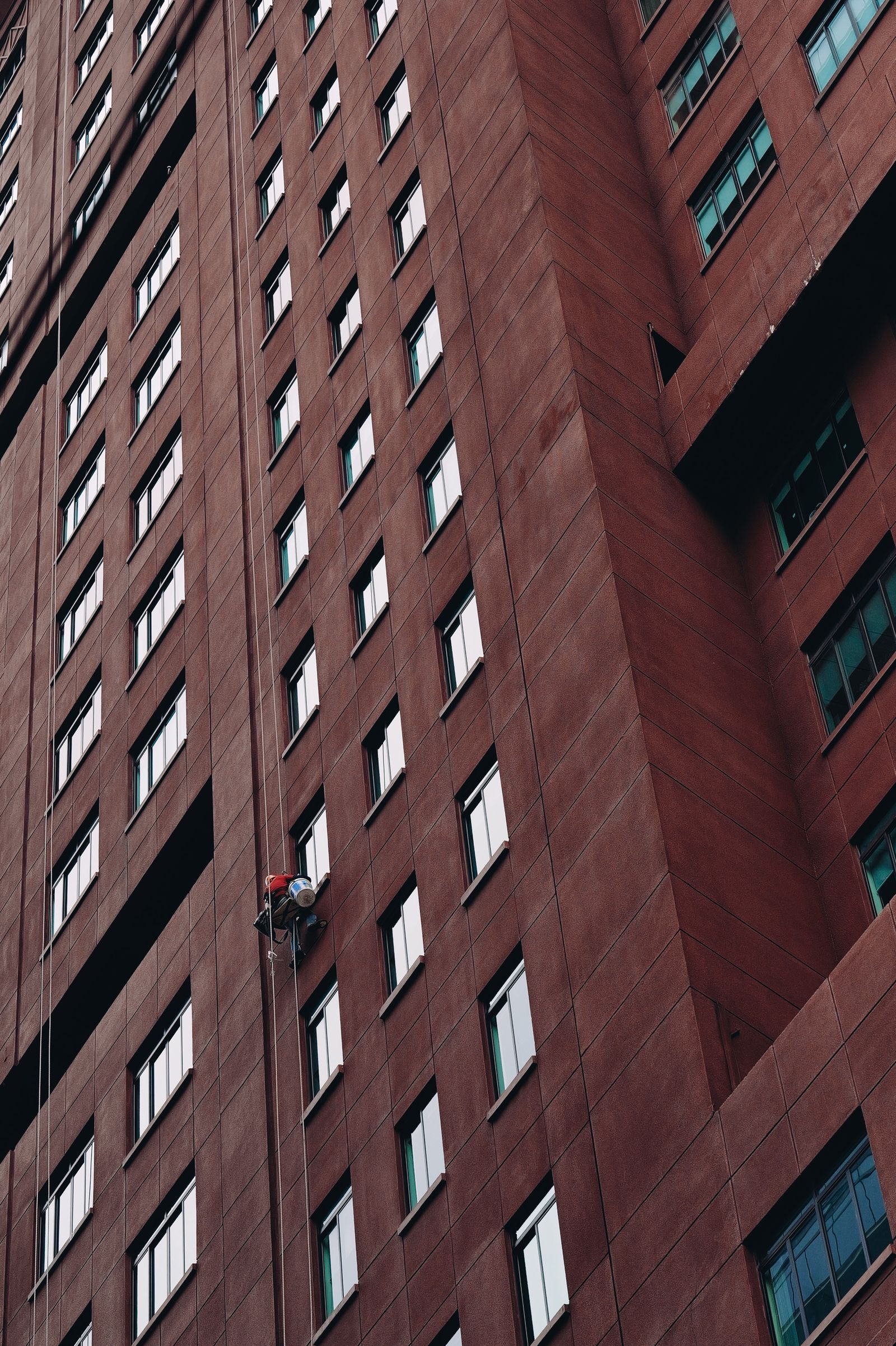
Ground-based pressure or soft washing may be practical for lower elevations, but upper floors introduce access and safety decisions. A lift can provide close contact where a detailed finish is needed, while a water-fed pole may suit some glazing or lower-risk zones. Drone assistance may support selected upper facade work when Cedar Rapids wind, utility lines, trees, public separation, launch space, visual line of sight, and applicable airspace conditions support it. It does not remove the need for ground controls, water management, or a second method on inaccessible or delicate details.
Downtown sidewalks, Czech Village and NewBo patios, Collins Road traffic, medical drop-offs, industrial gates, deliveries, events, and emergency routes can change throughout the day. An access plan should state how people and vehicles will be separated, how entrances remain usable, who can pause the work, and what happens when conditions change. If aerial access is not practical for an elevation, the proposal should price the lift, pole, roof-access, or hand-detail alternative rather than treating drone work as a promise.
Use a quote that makes the tradeoffs visible
A useful method comparison for a Cedar Rapids building should include the address, facade materials, visible conditions, priority areas, test plan, chemistry assumptions, pressure or rinse approach, access equipment, water source, drainage controls, pedestrian and vehicle controls, work hours, weather limits, exclusions, and closeout documentation. It should explain whether the objective is routine maintenance, a visible improvement before an event, a phased facade reset, or a recurring program. Specialty stains, repairs, and flood-related site constraints should be identified before the start date when known.
Send photos from each elevation, approximate height, material information, and operational details that affect the work: Downtown events, clinic schedules, tenant notices, loading periods, Collins Road shopping peaks, patio activity, parking rules, public access, and preferred dates. Call +1 239-351-2897 or email contact@dronebuildingcleaners.com to get a quote. A property-specific review can determine whether soft washing, controlled pressure, hand detail, a lift, a water-fed pole, drone assistance, or a combination is the sensible route for the building.